How to Use Burlap for Erosion Control
Burlap controls erosion as a temporary cover: lay untreated burlap over seeded soil, bury the top edge in a 6-inch trench, overlap strips 6 inches, and staple it down. It lasts about 6 to 12 months.
To use burlap for erosion control, lay untreated burlap of 10 ounces or heavier over a seeded slope. Staple it every 1.5 to 3 feet and bury the top edge in a 6-inch trench. Overlap strips by at least 6 inches. The fabric shields bare soil from rain while grass grows through it. Burlap breaks down in 6 to 12 months, so it suits gentle slopes and small bare patches.
Key Takeaways
- Untreated burlap of 10 ounces or heavier works as a temporary soil cover over seed.
- Dig a 6-inch trench at the top, overlap strips 6 inches, and staple every 1.5 to 3 feet.
- Burlap lasts 6 to 12 months, which gives grass time to root.
- Natural fiber netting is rated for gentle slopes, not channels or heavy runoff.
- Rolled blankets, hydromulch, and silt fence take over where burlap stops.
How to Use Burlap for Erosion Control?
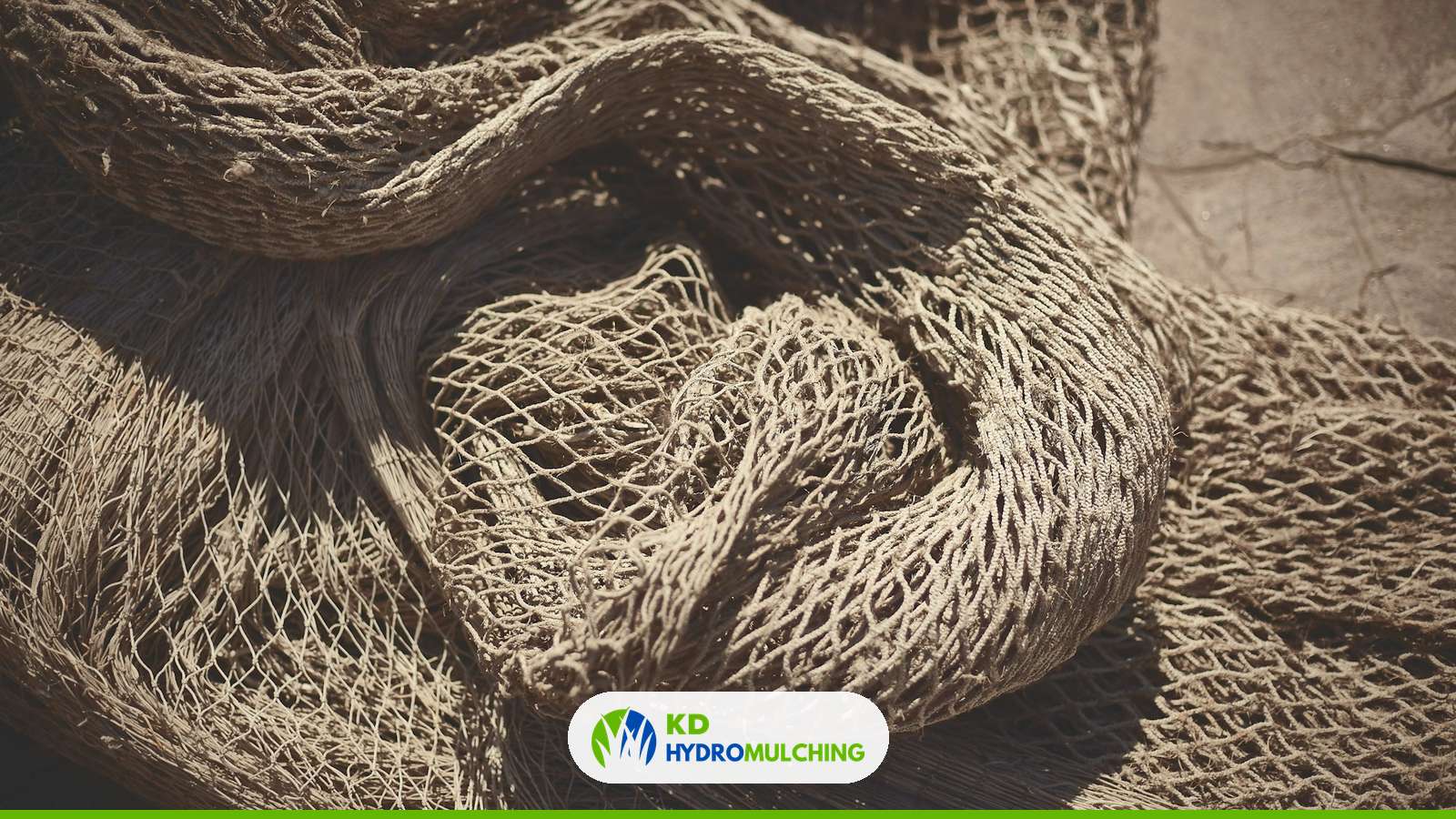
Using burlap for erosion control means laying untreated burlap over seeded soil and anchoring it with 6-inch staples. Burlap is a loose-woven fabric made from jute, a plant fiber. It softens raindrop impact and holds moisture against the seedbed. This section explains how to use burlap for erosion control in the order a crew works on site.
Our erosion control contractors use the same sequence on small bare areas, then switch to blankets or hydromulch where runoff is heavier. The materials come first.
What Materials Do You Need for Burlap Erosion Control?
You need untreated burlap, staples or stakes, seed, a rake, and a hose. Untreated fabric breaks down naturally, while treated or synthetic lookalikes can last years. The list below covers one slope job.
- Untreated burlap rolls, 10 ounces or heavier, cut in widths from 36 to 72 inches.
- U-shaped garden staples with 6-inch legs, or sharpened wooden stakes.
- Grass seed suited to the site and season.
- A rake, a shovel for the top trench, and a hose.
Commercial Supply Co. sells burlap in 36, 40, 48, 60, and 72 inch widths. A narrower roll is easier to carry and pin on a hillside. Seed choice matters as much as the fabric, so see our guide to slope grass seed. Soil preparation comes next.
How Do You Prepare the Soil Before Laying Burlap?
Prepare the soil by clearing rocks, sticks, and debris and raking the surface smooth. Caltrans warns that rocks and debris can lift fabric off the soil. Water then cuts a path between the fabric and the ground. The Alabama Blue Book adds that rolled products need firm ground and must never stretch over bumps.
Scatter seed on the damp, raked soil once the surface is level. Seed goes under the burlap, not on top of it. The open weave lets seedlings push through. Installation on the slope follows.
How Do You Install Burlap on a Slope?
Install burlap on a slope by working from the top edge down in six steps. The order keeps runoff from getting under the fabric.
- Rake the soil smooth and scatter seed on the damp surface.
- Dig a 6-inch trench across the top of the slope and bury the top edge of the burlap in it.
- Unroll the burlap straight down the slope so it lies flat and is not stretched tight.
- Overlap neighboring strips by at least 6 inches.
- Drive 6-inch staples or stakes every 1.5 to 3 feet along the edges and down the middle, with extra staples on overlaps.
- Water the burlap and seedbed until the soil is soaked.
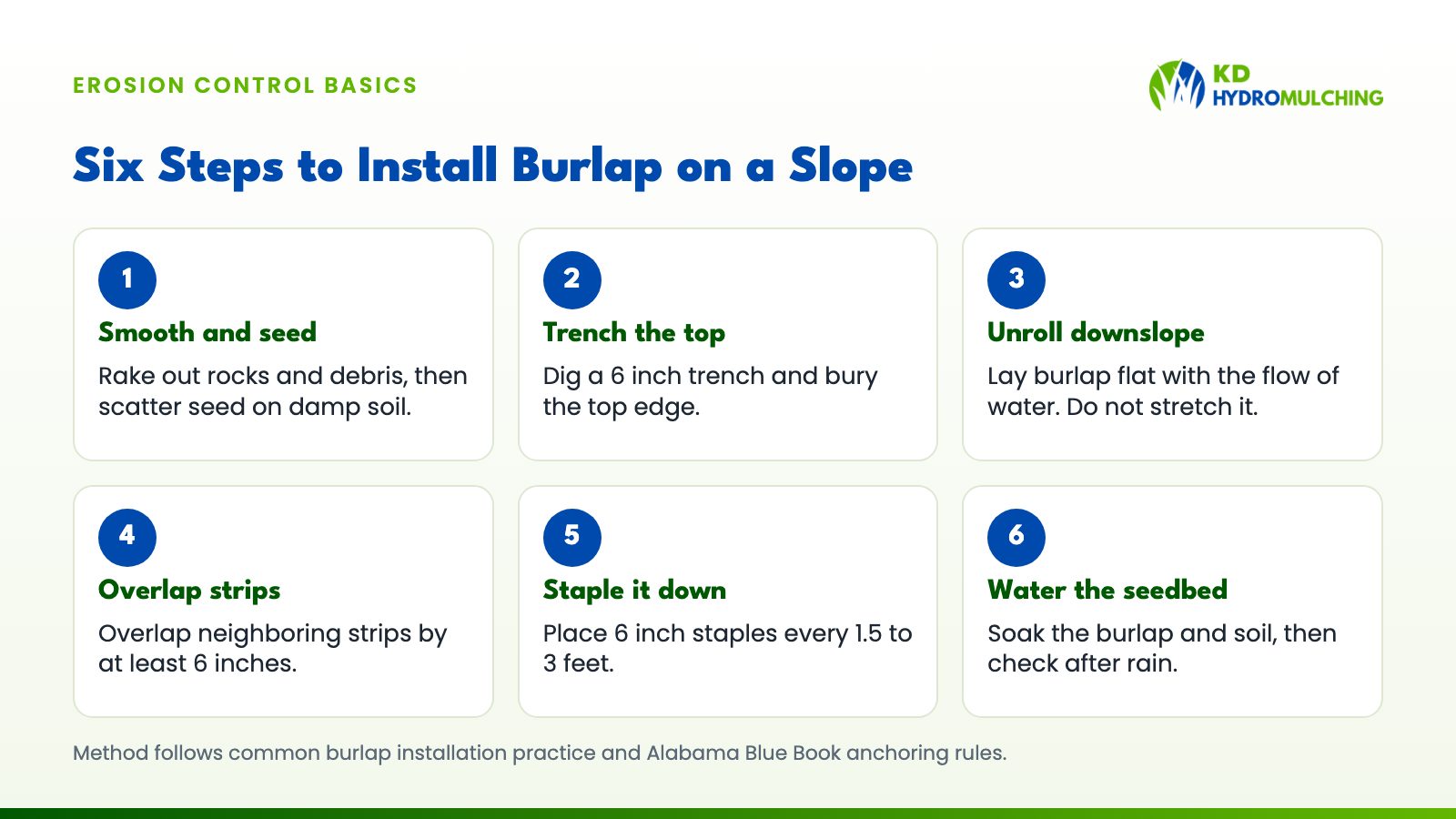
The diagram above shows the six steps in order. Staple spacing needs its own answer.
How Far Apart Should You Staple Burlap?
Staple burlap every 1.5 to 3 feet along the edges and down the middle. Plant Heroes suggests 3 to 5 feet, but the closer range holds better on slopes. The Alabama Blue Book sets a minimum of 1.3 staples per square yard for rolled products on slopes. Wire staples should be 11-gauge steel with legs at least 6 inches long.
Wind and runoff lift loose edges first. Extra staples along overlaps and the top trench stop that. Burlap that stays in contact with the soil does its job, as the next section explains.
Does Burlap Help With Erosion Control?
Yes, burlap helps with erosion control as a temporary cover on gentle slopes and small bare areas. The Alabama Blue Book credits temporary blankets with protecting seed from raindrop impact, holding moisture, and speeding germination. Burlap does the same job on a small scale. It does not reinforce soil or resist strong flow.
The Blue Book also notes that temporary blankets give no lasting protection once they break down. Grass roots must take over before the fabric fails. Slope limits decide where that works.
What Slopes Can Burlap Protect?
Burlap protects gentle slopes, where woven natural fiber netting is rated up to 5:1. A 5:1 slope drops 1 foot for every 5 feet of run. Caltrans uses jute mesh on slopes between 4:1 and 2:1. Ordinary burlap carries no such rating, so treat the lower numbers as the limit.
The table below compares burlap with the natural covers sold beside it.
| Cover | Lifespan | Slope limit | Typical job |
|---|---|---|---|
| Burlap fabric | 6 to 12 months | No rated limit | Small seedbeds and gentle slopes |
| Jute mesh | 12 months | 2:1 | Roadside and yard slopes |
| Straw blanket | Up to 12 months | 3:1 single net | Seeded slopes with moderate runoff |
| Coir blanket | 2 to 3 years | 2:1 and steeper | Slopes needing long protection |
Sources for the table are Commercial Supply Co., Caltrans, Valor Environmental, and the Alabama Blue Book. Steeper ground needs our slope runoff tips instead. Lifespan is the next limit.
How Long Will Burlap Last in the Ground?
Burlap lasts about 6 to 12 months in the ground before it breaks down. Wet soil and sun speed the process. Wellco Industries puts jute mesh at 8 to 24 months, depending on weight and weather. Treated burlap lasts longer, but it leaves fabric in the soil.
That window gives fast-germinating seed time to sprout and root. Slow-growing seed on a steep face can outlast the burlap. The next section separates burlap from the netting products sold beside it.
What Is Burlap Netting Erosion Control?
Burlap netting erosion control is the use of loose-woven jute fabric or open-weave jute netting as a temporary soil cover. Burlap erosion control netting appears in product listings under many names. Wellco Industries notes that ordinary burlap, jute netting, and rolled erosion control products are different builds. Do not swap one for another without checking the specs.
A product sold as a burlap erosion control blanket may be a plain burlap roll or a jute mesh. Check the weight, opening size, and slope rating before buying. Jute netting differs from burlap in one main way.
How Is Burlap Different From Jute Netting?
Burlap is a tight-woven fabric, while jute netting is an open mesh. Open mesh lets seedlings through more easily and can be laid before or after seeding. Caltrans says the open area of jute mesh is high enough for either order. Jute netting also anchors mulch on slopes, according to the Blue Book.
The Blue Book names jute mesh as very effective at holding mulch in place on slopes before grass establishes. It also advises wildlife friendly netting. Blankets handle steeper jobs, so they come next.
How to Use Erosion Control Blanket Instead of Burlap?
To use erosion control blanket, smooth the soil, seed it, trench the top, unroll with the flow, and staple. The method matches burlap, with firmer specs. Blankets are rolled down the slope in the direction of water flow and must touch the soil along their full length.
The Alabama Blue Book calls for 11-gauge staples with 6-inch legs and at least 1.3 anchors per square yard. Valor Environmental sets overlaps at 3 to 6 inches.
For types, slope ratings, and anchor spacing, read our straw blanket guide before choosing a roll.
Grades near 2:1 call for heavier blankets with higher slope ratings. Roll width, slope length, and water force all shape that choice. Our notes on steep grade blankets cover the options.
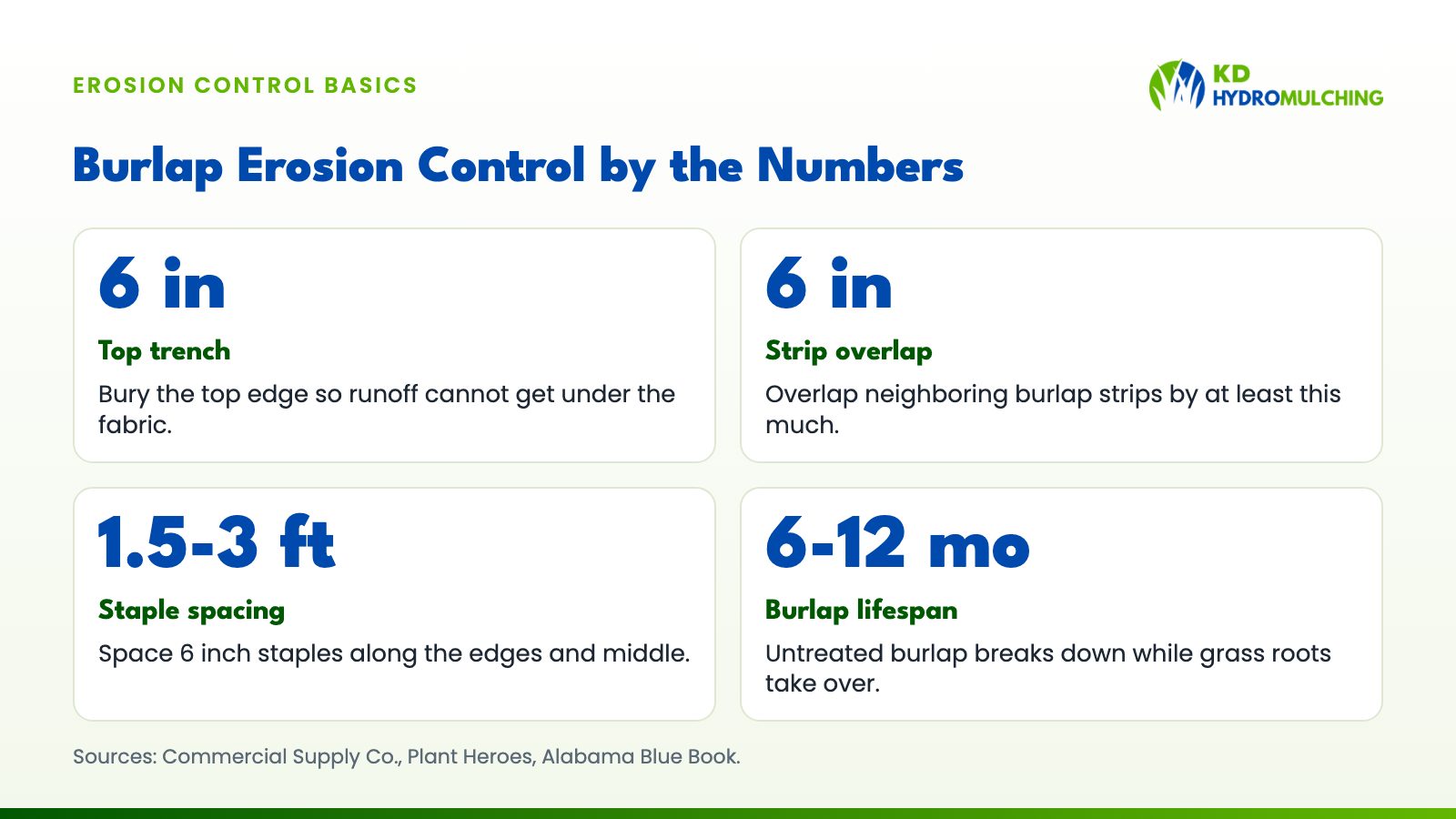
The graphic above lists the numbers that apply to burlap. Bags and tubes use a different method.
How Can You Control Erosion With Burlap Bags and Tubes?
Burlap bags and tubes control erosion when filled with soil or compost and stacked or pinned across a slope. Each row slows runoff and catches soil. Commercial Supply Co. notes that bags let water pass while holding back sediment. Burlap bags are sold from 4 by 6 inches up to 23 by 40 inches.
Compost tubes are pinned across the slope like small terraces, and small plants go into slits in the tube. Stacked bags suit short slopes and bare spots below a drain outlet. Running water needs a stronger barrier, such as the one in sediment barrier guide.
Wellco Industries advises against plain fabric in channels and streambanks, where flow concentrates. Bags, tubes, and fabric are all temporary. They need checks after storms, as the next section shows.
How Do You Maintain and Remove Burlap After Installing It?
Maintain burlap by checking it after every heavy rain and re-stapling any lifted edge. A lifted edge lets water run under the fabric and start a new gully. Walk the slope and look at the points below.
- Open seams or edges that have pulled away from the soil.
- Gaps where the fabric floats above the ground.
- Rills, or small channels, forming under or beside the burlap.
- Torn fabric that exposes seed or soil.
Keep the seedbed damp until grass is up, using a fine spray that does not wash out seed. Our seedbed watering tips give a schedule for new seed.
Penn State Extension treats burlap differently on small garden seedbeds. A loose burlap cover there comes off as soon as germination begins, so seedlings get light. On a slope, anchored burlap stays in place and decomposes while the grass thickens. Several side questions remain.
What Else Should You Know About Burlap Erosion Control?
Burlap raises a few side questions that do not need their own section. The answers below stay short and point to fuller guides.
How to Control Erosion Without Burlap?
How to control erosion without burlap comes down to covering bare soil, planting it, and slowing the water. Blankets, straw mulch, hydromulch, and silt fence all do part of that job. Our overview of erosion control options compares them.
Hydroseeding and hydromulch go on in about 2 hours, against a full crew day for a blanket, says hydroseeding.info. That speed matters on long slopes where bare ground must be covered before the next storm. Our hydromulching services use it on larger sites.
What Happens When Burlap Gets Wet?
When burlap gets wet, it swells, turns heavier, and softens while holding water against the soil. That moisture helps seed sprout under the fabric. Wet burlap also sags more, so staples matter more after rain.
Is Burlap Safe for Wildlife?
Open burlap netting is a wildlife risk when the mesh is loose, because small animals can snag in it. The Alabama Blue Book advises wildlife friendly netting on all rolled products. A USDA Forest Service paper by Barton and Kinkead documents snakes caught in rolled erosion products.
Do You Need a Permit for Erosion Control?
A permit is needed when a site disturbs 1 acre or more. The EPA requires stormwater permit coverage at that size, including smaller sites in a larger plan. Home slopes under 1 acre fall below that line, but local rules can still apply.
How Does KD Hydromulching Help With Erosion Control on Slopes?
KD Hydromulching helps by matching the cover to the slope, from burlap on small patches to blankets on steeper ground. We install blankets, straw matting, silt fence, and tackifiers, then seed the area for lasting cover. Our crews walk each site to check slope, soil, and runoff before choosing materials.
Ground too steep for fabric alone moves to our slope stabilization experts, who pair grading with plant cover.
Every plan starts with how water moves across the site. Roof drains, ditches, and upslope runoff decide where cover and barriers go. Our slope erosion control work follows that map. Knowing how to use burlap for erosion control also means knowing when a bigger system is needed.
Send the slope size, soil, and runoff details through a site visit request to get a project estimate. We will review the site and recommend a cover that fits the slope.
The estimate lists the materials, the crew, and the schedule for the job. Weather and soil moisture can move the start date. Anyone planning slope work can reach KD Hydromulching technicians to line up grading, seeding, and erosion control in one plan.