What Is a Silt Fence and What Is Silt Fence Used for?
A silt fence is a temporary sediment control barrier made of porous geotextile fabric on posts. It stops loose soil from washing off construction sites by ponding runoff so sand and silt settle out.
A silt fence is a temporary sediment control barrier of porous geotextile fabric, with its bottom 4 to 8 inches buried. It is used at construction sites to stop loose soil from washing away. Wooden or metal posts hold the fabric, and the fence ponds runoff so sand and silt settle out. Crews check it for sags and tears and remove it once the site is stabilized.
Key Takeaways
- A silt fence is a temporary sediment control barrier made of porous geotextile fabric on wooden or metal posts.
- The fence traps soil mostly by ponding runoff, and a full pond should drain in 4 to 12 hours.
- Alabama specs define Type A as wire supported and Type B as unsupported.
- A silt fence belongs on sheet flow, not in streams, ditches, or other concentrated flow.
- Weekly checks and sediment cleanout at half the fence height keep the barrier working.
What Is a Silt Fence?
A silt fence is a temporary sediment barrier made of geotextile fabric attached to posts. Geotextile is a synthetic cloth that passes water and holds back soil. The Alabama Blue Book places the barrier downslope of a disturbed area. Crews use it to catch sediment before runoff leaves the site.
Our crews build this barrier as part of our silt fence services, next to blankets, straw matting, tackifiers, and soil binders. The barrier is simple, but its height, posts, and fabric follow written specs. The next heading describes what the finished fence looks like.
What Does a Silt Fence Look Like?
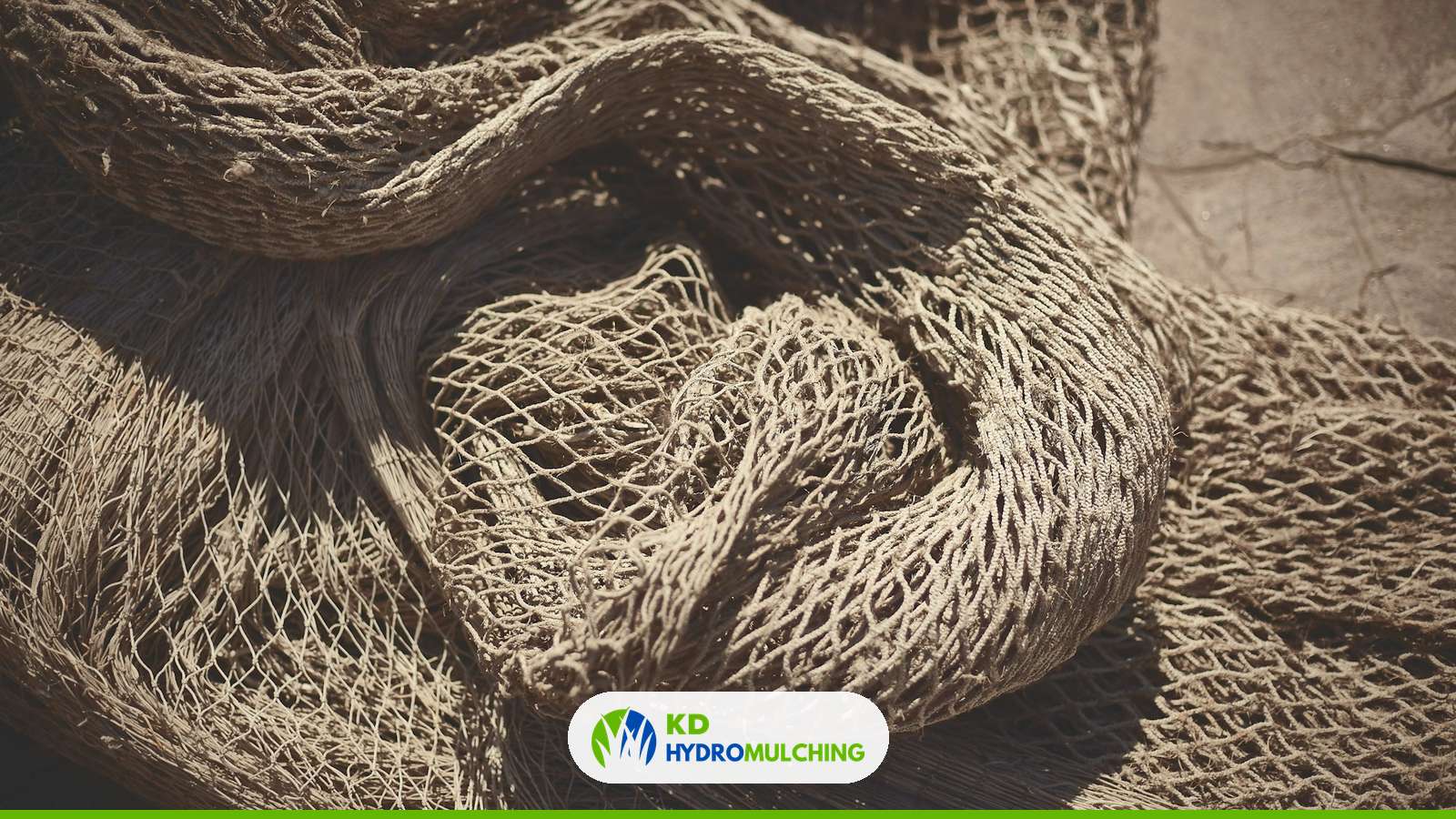
A silt fence looks like a low fabric wall on evenly spaced posts. MKB Company sells fabric in 24, 30, 36, and 42 inch heights. The Alabama Blue Book sets a Type A fence at 24 to 32 inches above ground. Posts stand on the downhill side, and the fabric bottom sits buried in a trench. Other names for the same barrier come next.
What Is Another Name for a Silt Fence?
Another name for a silt fence is a sediment barrier. The Alabama Blue Book uses that term, and Wikipedia notes that some people call it a filter fence. That name misleads, because the fence works mainly by ponding and settling. Reinforced versions get names such as wire-backed or super silt fence. The next section turns to the fence's main job.
What Is a Silt Fence Used for?
A silt fence is used for trapping sediment from sheet flow on bare, disturbed ground. Sheet flow is thin, wide runoff that moves over the surface instead of in a channel. The fence holds large soil particles on the job site. That protects streams, storm drains, and roads downhill. Five common jobs follow.
- Perimeter control along the downhill edge of a graded lot.
- Protection around or downstream of soil stockpiles.
- A sediment barrier beside a stream during work near the bank.
- Inlet protection around a stormwater drop inlet.
- A check dam in a small ditch that drains one acre or less.
The Alabama Blue Book lists each of these uses. Silt fence erosion control starts when rough grading strips plant cover and leaves loose soil. Bare soil washes off a slope with the next hard rain. The fence needs to be in place first, as the next heading explains.
What Is a Silt Fence in Construction?
A silt fence in construction is the perimeter control that protects neighboring land and water during earthwork. Grading, clearing, and trenching all expose soil. The Alabama Blue Book says to plan silt fence before zones are graded. Builders therefore set the fence first, so day-one soil stays on site.
How Does a Silt Fence Work?
A silt fence works by ponding runoff behind the fabric so soil settles out. Wikipedia says sediment is captured mostly by ponding and settling, not by filtering through the cloth. The Alabama Blue Book agrees and adds that filtration plays a lesser role. The graphic shows the four steps from runoff to drainage.
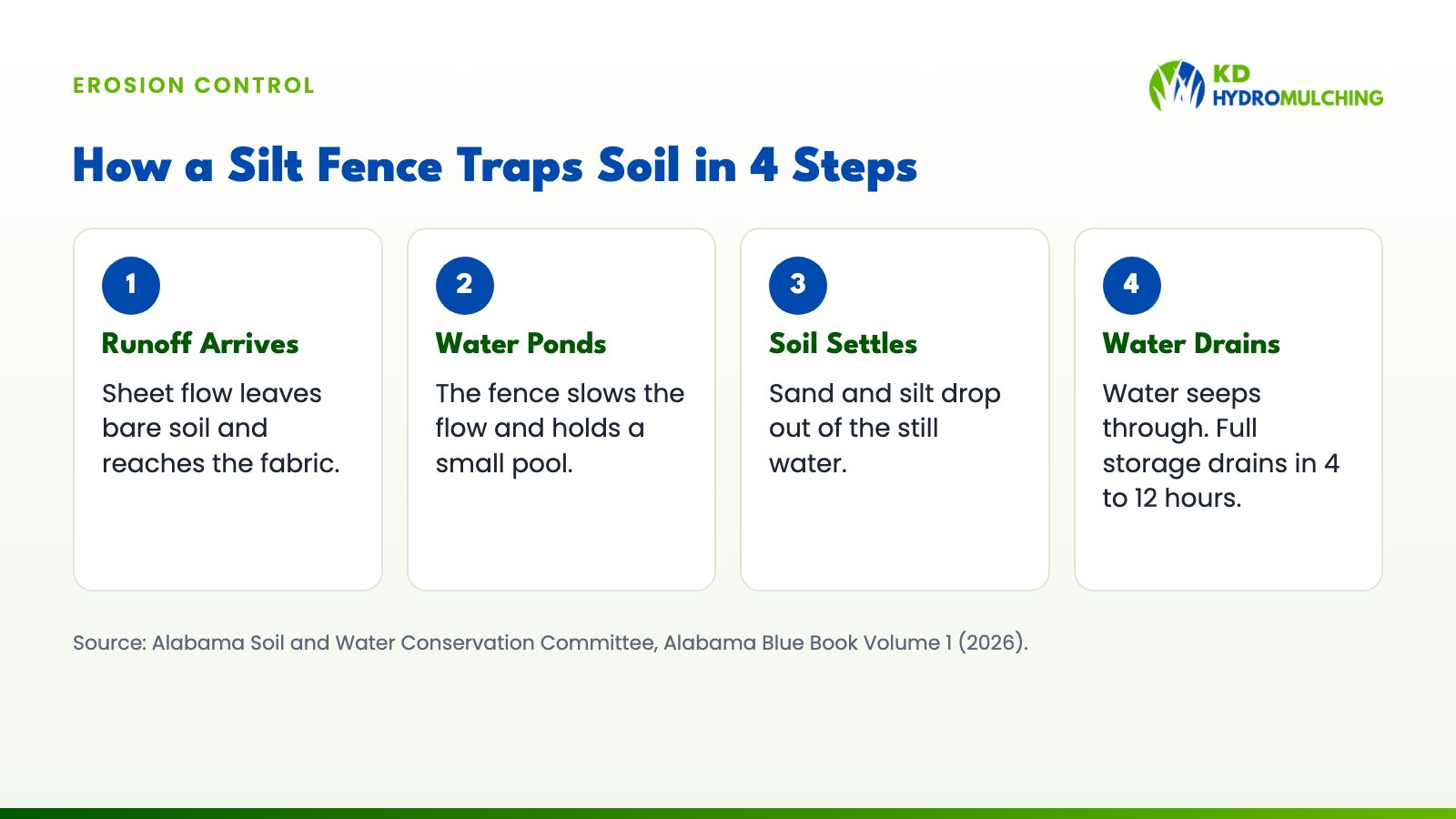
The Alabama Blue Book says a fence at full storage should drain in 4 to 12 hours. Its rule of thumb limits the drainage area to 1/4 acre per 100 feet of standard fence. Reinforced fence can serve 1/2 acre per 100 feet. Two side questions affect how the fence performs.
What Does a Silt Fence Do and Not Do?
What a silt fence does is hold back coarse sediment such as sand and silt. The Alabama Blue Book says silt fences trap coarse sediment but do not effectively reduce turbidity. Turbidity is the cloudiness that fine suspended particles cause. Sediment basins handle sites that must also lower turbidity. The next question covers the fabric itself.
Can Water Go Through a Silt Fence?
Yes, water can go through a silt fence because the geotextile is porous by design. The Alabama Blue Book cites a permittivity of 0.05 per second and an apparent opening size of 0.60 millimeters at most. Fine soil still clogs the pores over time. The Blue Book calls this blinding, so every fence needs a dewatering plan. Fabric and posts decide how long the barrier holds.
What Materials Make Up a Silt Fence?
A silt fence is made of geotextile fabric, posts, and fasteners, plus wire backing on reinforced types. The Alabama Blue Book lists four parts for a Type A fence.
- Geotextile fabric that meets the American Association of State Highway and Transportation Officials (AASHTO) M288 standard.
- Steel T-posts at least 4 feet long and 1.25 pounds per foot.
- Wire fence of 14-gauge wire with 6 inch by 6 inch openings.
- Hog rings every 1 foot along the top of the wire.
The AASHTO M288 table sets the fabric at 0.60 millimeters maximum opening size. It also requires 70% of fabric strength to remain after 500 hours of ultraviolet light. Type B fences may use wood posts of 3 inch diameter or 2 by 4 lumber. The Blue Book warns against light weight steel posts from building supply stores. Fabric and post choices lead into the types of silt fence.
What Are the Types of Silt Fence?
The types of silt fence are standard, wire-backed, and super silt fence, and states label them Type A, B, or C. Alabama defines two types. Other local handbooks add a Type C for wire-backed fence. The table compares four common designs.
| Type | Support | Size | Main use |
|---|---|---|---|
| Alabama Type A | Wire backed | 24 to 32 in above ground | High runoff and slopes over 10 ft |
| Alabama Type B | No wire | 36 in wide fabric | Projects of 6 months or less |
| Type C (Tennessee handbook) | Wire backed, metal posts | 40 in posts, 36 in fabric | Sites beside creeks and ponds |
| Super silt fence | Wire mesh or chain link | Varies by jurisdiction | Large drainage areas |
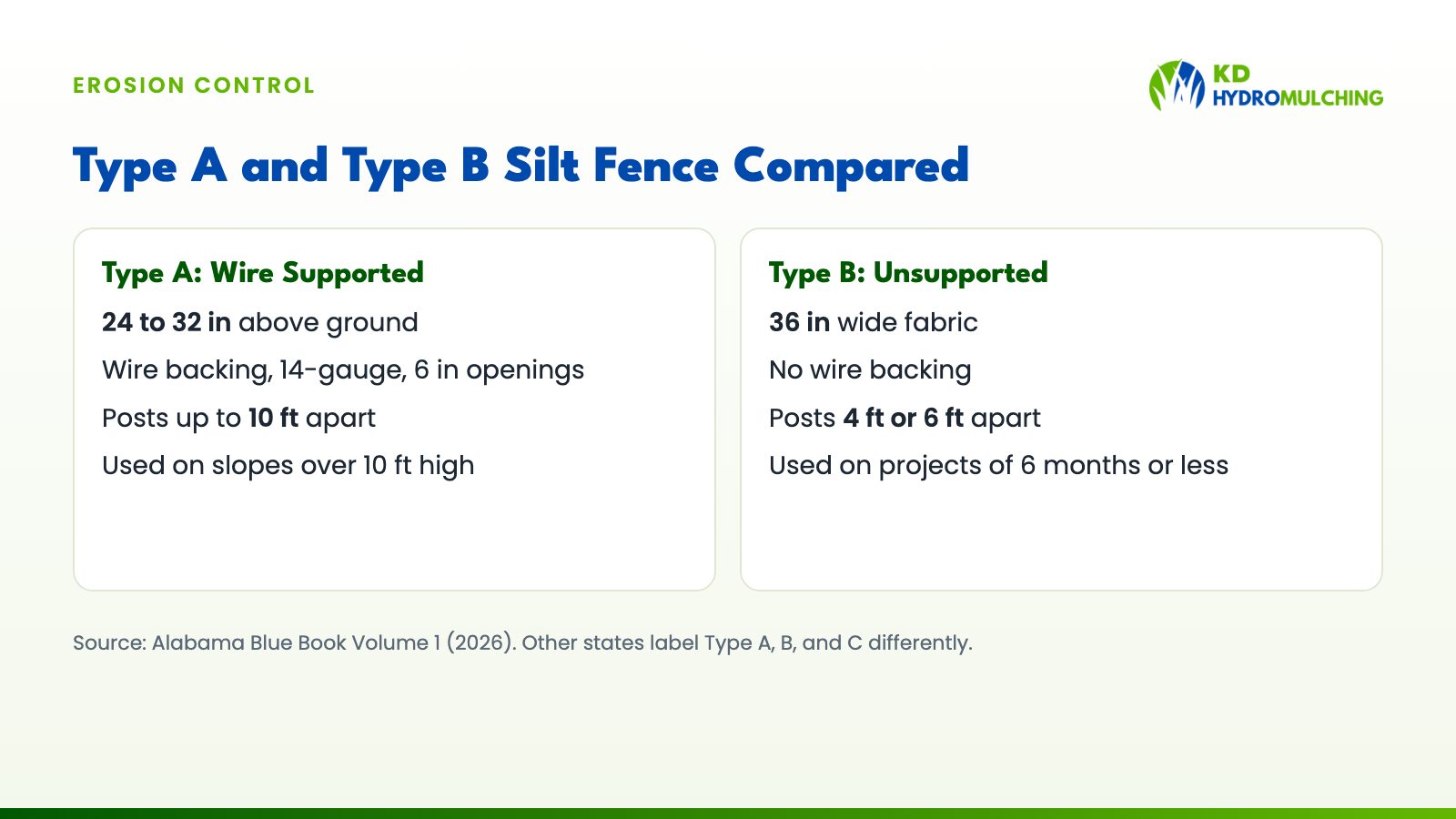
The Alabama rows come from the Alabama Blue Book. Family Handyman quotes a Dyersburg, Tennessee handbook for the Type C row, and Wikipedia covers the super fence. Local rules pick the type for each site. The graphic below sets the two Alabama types side by side.
What Is a Type A Silt Fence?
A Type A silt fence is the wire-supported fence for the highest runoff in Alabama specs. Posts stand up to 10 feet apart, or 5 feet apart where runoff ponds against the fence. Crews use it where slopes exceed 10 feet of vertical height. Tie backs at the ends can keep the fence from overturning. Our steep slope stabilization work can pair with this fence at the toe of a cut. The Type B fence has lighter demands.
What Is a Type B Silt Fence?
A Type B silt fence is the unsupported fence for short projects of 6 months or less. The fabric is 36 inches wide with no wire backing. Posts stand 4 or 6 feet apart, based on how far the fabric stretches. The last design is the heavy one.
What Is a Super Silt Fence?
A super silt fence is a reinforced fence that backs the fabric with wire mesh or chain link. Wikipedia says the metal adds strength against trapped soil and water. It also discourages vehicles from driving over the fence. A poor install can turn the fence into an accidental sediment basin when the fabric clogs. Required locations come next.
Where Is a Silt Fence Required?
A silt fence is required where a stormwater permit or local code calls for sediment control. The EPA says a Clean Water Act permit applies to construction that disturbs 1 acre or more. It also covers smaller lots that belong to a larger plan disturbing 1 acre or more. Family Handyman advises asking the local building department for site specs. Timing matters as much as location.
When Should a Silt Fence Be Installed?
A silt fence should be installed before grading or clearing begins on the site. The Alabama Blue Book says to plan sediment controls before graded zones are seeded. The EPA permit also requires stabilizing bare areas when work stops for more than 14 days. Our slope erosion practices guide covers cover and grading that lower the load on the fence. Failures usually trace back to placement.
Why Do Silt Fences Fail?
Silt fences fail when poor placement, shallow trenching, or missing upkeep let soil escape. Wikipedia reports good laboratory results but generally poor field results. Four causes show up in the research.
- Fences placed where they cannot pond runoff.
- Fabric edges that are not buried and backfilled.
- Fabric that falls off posts or posts that get knocked down.
- Holes from construction materials stored against the fence.
The Alabama Blue Book adds that silt fences should not cross streams, ditches, or other concentrated flow. The graphic lists the four numbers that prevent most of these failures. Erosion control silt fence plans use them as a checklist.
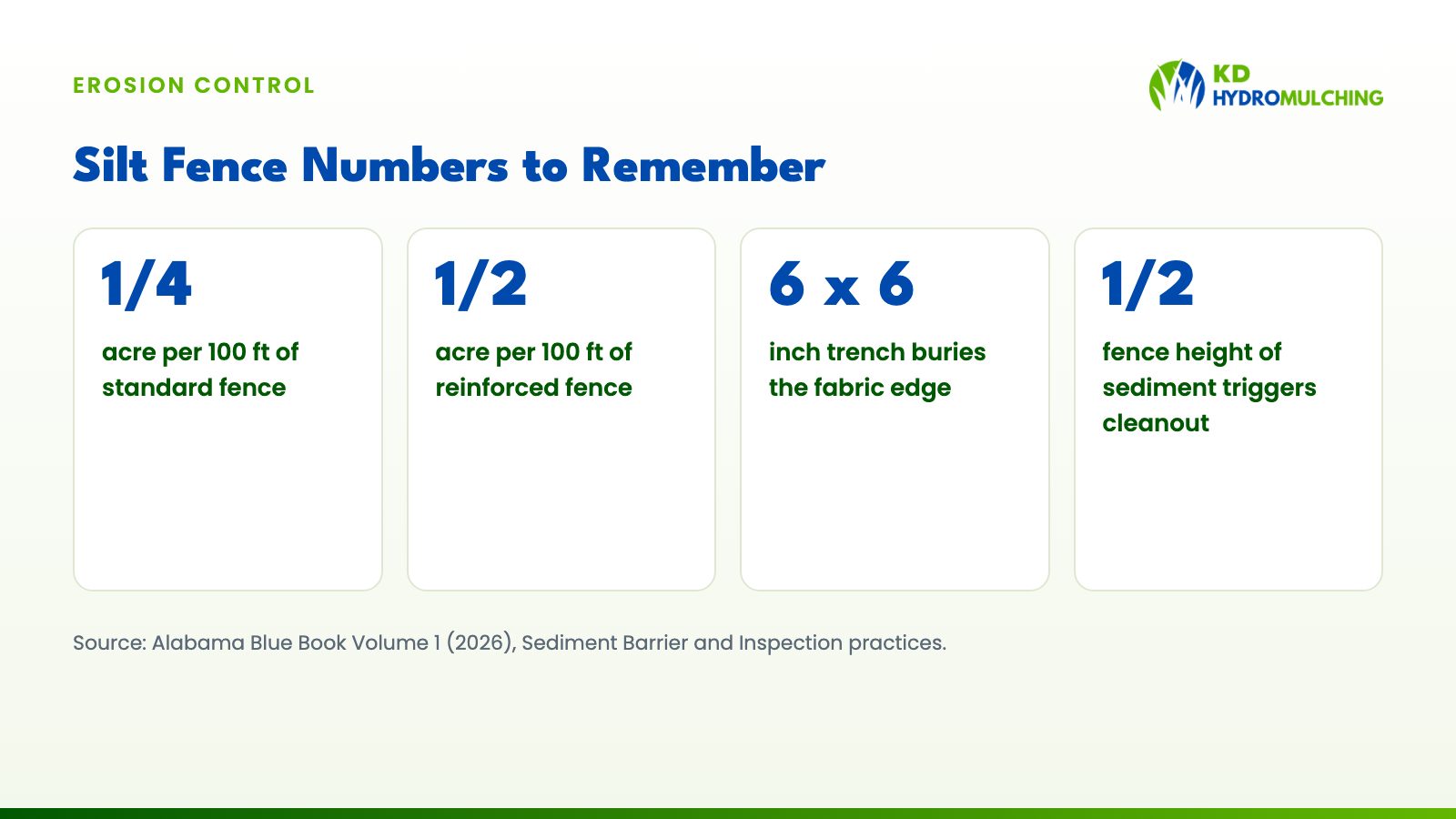
The trench figure reflects the preferred off-set method. The posts and wire sit 6 inches downslope of the 6 inch by 6 inch trench. Auburn University tests found less undermining with this method than any other tested. Upkeep protects those gains.
How Do You Maintain and Remove a Silt Fence?
Maintain a silt fence by inspecting it weekly and after rain of 3/4 inch or more in 24 hours. The Alabama Blue Book lists a short routine for sediment barriers.
- Check the anchorage and look for leaks under the fence.
- Look for tears in the fabric.
- Start any repair within 24 hours of the report.
- Remove sediment once it reaches half the barrier height.
- Place removed sediment on a stabilized site.
Fences with a full pond or sagging fabric need attention before the next storm. Cleanout at half height keeps the weight off the posts. Removal follows the same logic as the rest of the routine.
When Can You Remove a Silt Fence?
You can remove a silt fence once the disturbed ground is stabilized with grass, pavement, or other permanent cover. The Blue Book describes a uniform stand as 85% ground cover and 1 inch of growth. Crews pull the posts and fabric and then seed the bare strip left behind. Our hydraulic seeding crews cover that strip with a seed and mulch slurry.
The slurry gives seed contact with the soil and holds moisture while roots form. Choosing grasses and ground covers for long-term cover is covered in our guide to erosion control plants. Several short questions remain.
What Else Should You Know About Silt Fences?
Silt fences raise a few practical questions beyond definition and types. The short answers below cover lifespan, depth, installation, and cost.
How Long Does a Silt Fence Last?
A silt fence lasts about 6 months to 1 year in the field. The Alabama Blue Book calls Type B fence suited to projects of 6 months or less. It expects the fabric to last the duration of most construction projects. BCP Inc. says its fabric is UV stabilized for up to 12 months outdoors. Posts can often be reused when the fabric is replaced.
How Deep Does a Silt Fence Need to Be Buried?
A silt fence needs a trench 6 inches deep and 6 inches wide for the fabric edge. The Alabama Blue Book calls the off-set trench the preferred method. Burying the edge stops runoff from cutting rills under the fence. Shallow trenches are a leading cause of the failures above.
How Is a Silt Fence Installed?
A silt fence is installed on the contour, with both ends turned upslope so runoff cannot flow around them. Crews trench the fabric edge, set posts on the downhill side, and attach and overlap the fabric. J-hooks or C-shaped curves work where the contour cannot be followed. Family Handyman notes that digging the trench is the hardest part and suits an excavator. Our crews follow these steps through our erosion control work on job sites.
How Much Does a Silt Fence Cost?
A silt fence costs less than $15 for a 50-foot roll of fabric at retail. Family Handyman lists that price, plus complete 300-foot Type C kits under $1,300 and basic wooden posts under $2 each. Labor, trenching, and removal add to the total. Grading and drainage work carry their own prices, covered in our drainage cost guide.
How Does KD Hydromulching Help With Silt Fence and Erosion Control?
KD Hydromulching helps by pairing sediment barriers with plant cover that lasts after the fence comes down. We set silt fence, blankets, and straw matting, then hydroseed the slope for lasting cover. Each job starts with a site walk to check slope, soil, and runoff paths. Disturbed corridors also get cover through our utility ROW seeding crews.
Our crews serve homeowners, builders, and utility owners across North Alabama. We match barrier type, length, and cover to the slope and runoff on each site. Silt fence for construction sites works well when seeding follows soon after grading.
Send the site details, including slope, soil, and acreage, through contact us for a project estimate. We will review the plan, walk the site, and schedule the work so barriers go in before grading begins.
Anyone planning earthwork can reach KD Hydromulching installers to line up barrier, grading, and seeding work in one plan.