Clearing and Grading Land and Methods of Land Clearing
Clearing land removes trees, brush, stumps, and debris, and grading reshapes the ground to a planned slope. Full lot preparation costs $1.18 to $2.00 per square foot.
Clearing and grading land means removing trees, brush, stumps, and debris, then reshaping the ground to a planned slope. Professional lot preparation costs $1.18 to $2.00 per square foot, and clearing alone runs $1,500 to $6,000 per acre. Crews work in a strict, repeatable order: survey, permits, clearing, rough grading, finish grading, and erosion control.
Key Takeaways
- Clearing and grading land costs $1.18 to $2.00 per square foot for full lot preparation.
- Land clearing methods include mechanical, manual, forestry mulching, burning, chemical treatment, and grazing.
- Rough grading sets the general shape, and finish grading sets the final slopes.
- Final grade should slope at least 0.5 inch per foot for 10 feet away from a foundation.
- Sites disturbing 1 acre or more need a federal construction stormwater permit.
- Bare soil needs seed, mulch, blankets, or silt fence within 14 days.
What Is Clearing and Grading Land?
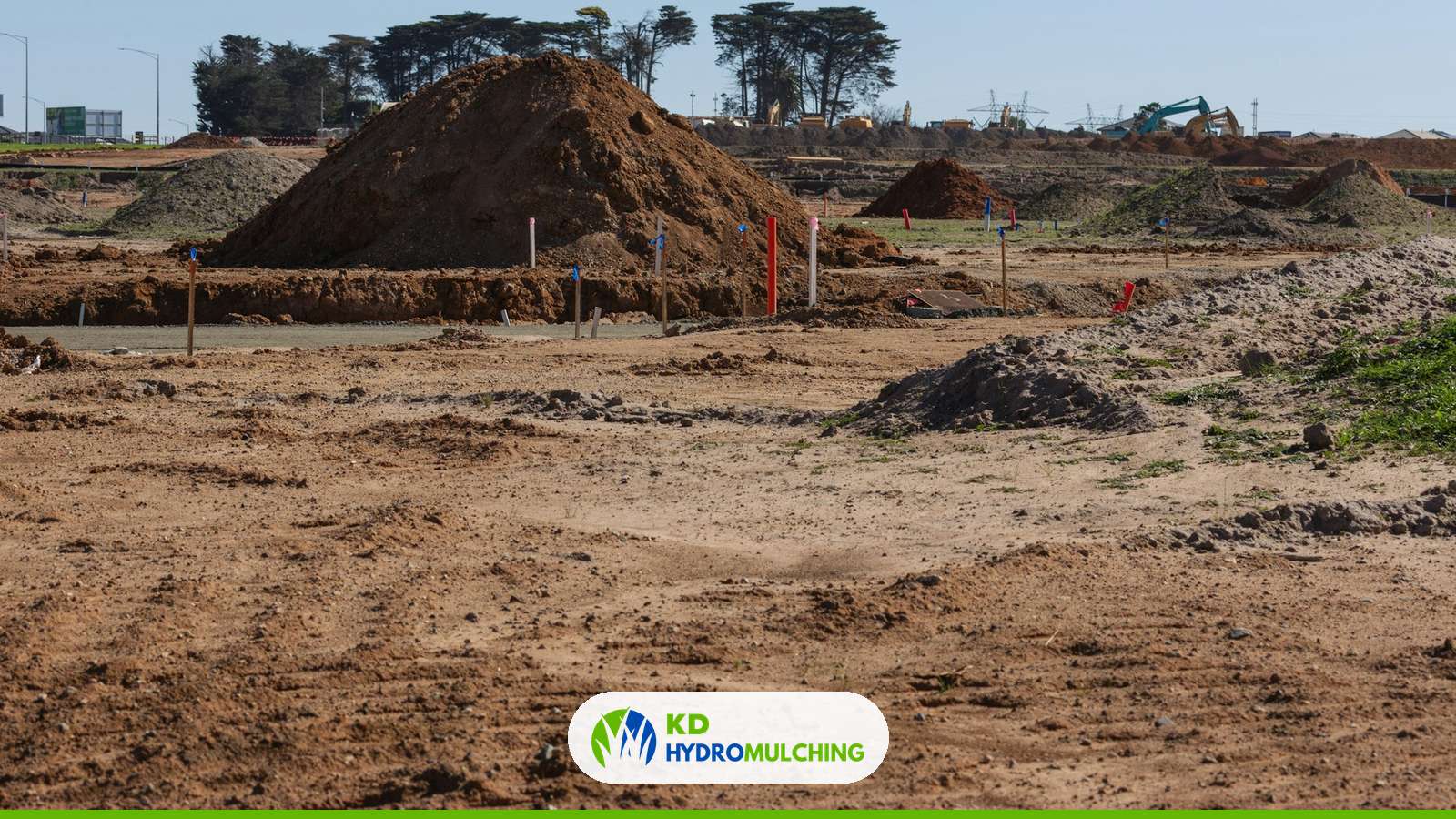
Clearing and grading land is the removal of vegetation and debris followed by reshaping the surface for drainage and building. Clearing comes first because grading equipment cannot shape ground covered in stumps and brush. Grading then sets the slopes that move water off the site.
Our land preparation services cover the debris clearing and grading stages. Each stage has its own tools, rules, and timing. The next three questions define the terms used in the rest of this guide.
What Does Land Clearing Include?
Land clearing includes removing trees, brush, stumps, rocks, and debris from a property. Crews cut standing vegetation first. Grubbing then digs stumps and roots out of the soil.
Debris is hauled off, chipped, or burned where local rules allow. Brush and land clearing stops at the surface, while tree felling and stump grinding belong to separate tree contractors. Grading begins once the surface is clear, and our grading crews pick up from there.
What Does Grading Land Mean?
Grading means reshaping the ground into a flat base or a controlled slope. Crews cut soil from high spots and fill low spots. Bulldozers, excavators, and motor graders move the soil.
The goals are drainage, a stable building pad, and less erosion. Land grading and clearing therefore work as one job with two phases. The purpose of the project decides the finished shape.
Why Are They Clearing the Land?
Land is cleared to open space for building, farming, access roads, and drainage. Builders need a level pad for foundations. Farmers need open fields for equipment.
Owners also clear brush to remove hiding places for rodents, snakes, and mosquitoes. Land clearing for construction follows stricter steps than clearing for pasture. Each purpose points to a different clearing method.
What Are the Methods of Land Clearing?
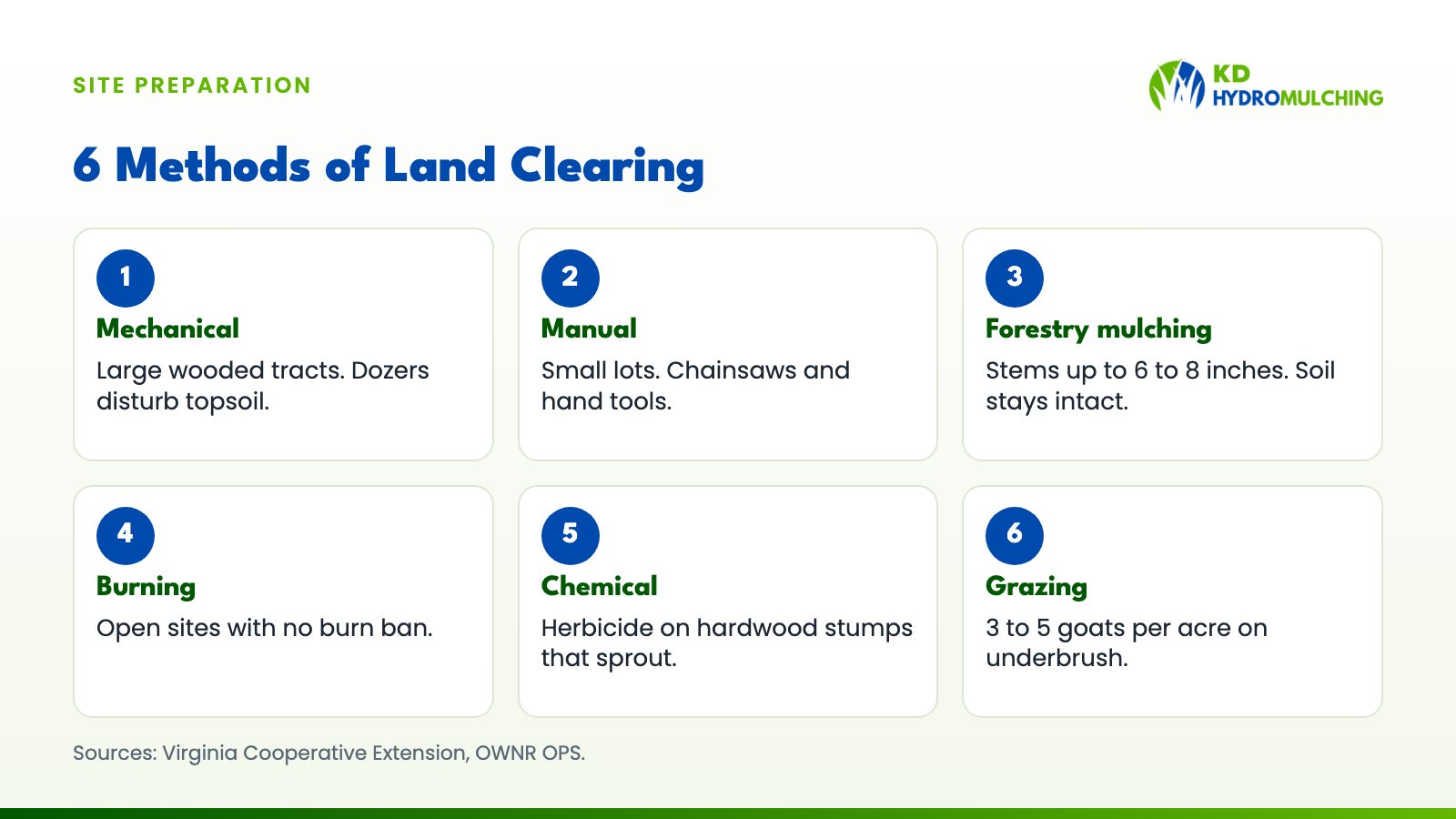
The main methods of land clearing are mechanical clearing, manual clearing, forestry mulching, burning, chemical treatment, and grazing. Mechanical clearing uses bulldozers and excavators to push over trees and pull roots. Manual clearing uses chainsaws and hand tools on small lots.
The table compares the six methods by use and effect on topsoil. Virginia Cooperative Extension and OWNR OPS supply the topsoil notes.
| Method | Suited to | Effect on topsoil | Debris handling |
|---|---|---|---|
| Mechanical (dozer or excavator) | Large wooded tracts | Disturbs and often removes topsoil | Piled, hauled, or burned |
| Manual (chainsaw, hand tools) | Small lots and tight access | Light disturbance | Hauled or chipped |
| Forestry mulching | Brush and trees up to 6 to 8 inches | Soil stays intact | Mulch left in place |
| Burning | Open sites with no burn ban | Light disturbance | Burned on site |
| Chemical (herbicide) | Hardwood stumps that sprout | Soil stays intact | Stumps rot in place |
| Grazing (goats) | Underbrush and small trees | Soil stays intact | Plants eaten |
The graphic below shows the same methods in a quick-reference panel. The sections after it explain the three methods that raise the most questions.
What Is Forestry Mulching?
Forestry mulching is a method that shreds trees and brush in place with a mulching head on tracked equipment. Mulching heads handle stems up to 6 to 8 inches, and they can grind a range of stump sizes. The shredded mulch stays on the ground and reduces erosion.
Virginia Cooperative Extension lists mulching fees of $200 to $400 for small machines. Large machines run up to $1,200, billed by the hour. A licensed forestry contractor runs this equipment, because it is a separate trade from our grading work. Disposal cost brings up the next question.
What Is the Cheapest Method of Clearing Land?
The cheapest method of clearing land is piling and burning debris on site where local rules allow it. Mississippi State University Forestry puts burning at an average $53 per acre in 2012 for site preparation in the Southern coastal plain. That figure is dated, so current quotes run higher.
Virginia Cooperative Extension warns that pile and burn poses a fire hazard and rarely burns completely. Burn bans differ by county, so a call to the local fire authority comes first. OWNR OPS adds that mulching in place saves $500 to $2,000 or more per acre against clear-and-haul.
Do Herbicides and Goats Clear Land?
Herbicides and goats clear land slowly, and each targets sprouting brush rather than whole trees. Hardwood stumps sprout vigorously unless a labeled herbicide kills the roots, says Virginia Cooperative Extension. Pine stumps rot away in three to five years.
Goats graze at 3 to 5 goats per acre. A West Virginia power line study saw goats cut brush cover from 45 percent to 15 percent in one year. Sheep needed three years. Slower methods suit owners who do not have a building date.
How Do You Clear and Grade Land Step by Step?
Clear and grade land in seven ordered steps. The order matters because each step depends on the one before it. The list below shows the sequence our crews follow on a typical lot.
- Survey the lot and mark boundaries, trees to keep, and drainage paths.
- Confirm permits with the county or city.
- Call 811 so crews can mark buried utilities.
- Clear vegetation and grub the stumps.
- Strip and stockpile the topsoil.
- Rough grade the cuts and fills.
- Finish grade, then seed and mulch the bare soil.
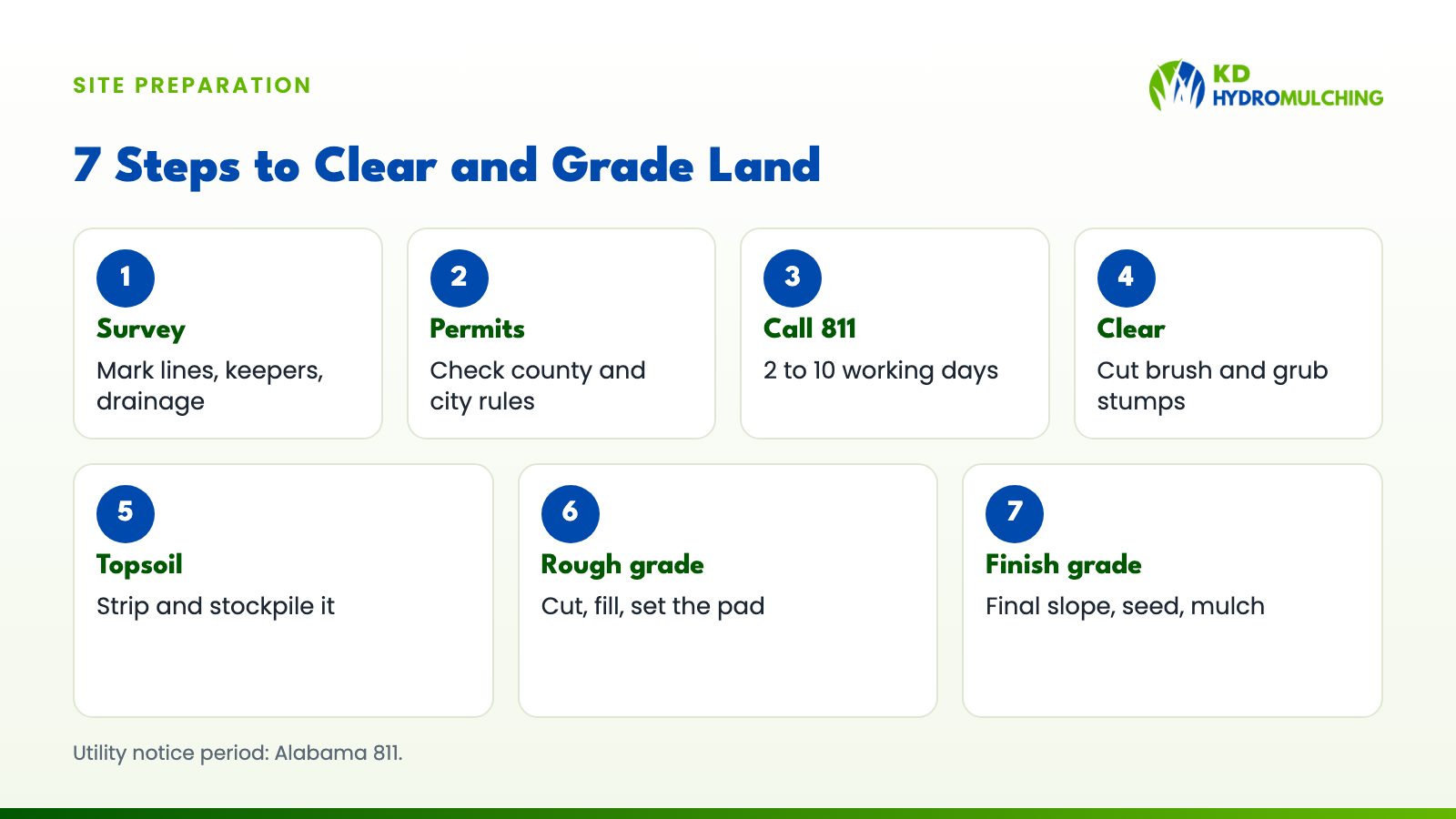
The graphic lists the same seven steps with a short note on each. Alabama 811 is free and asks for 2 to 10 full working days of notice before digging. Crews stay at least 18 inches from marked lines until they confirm the exact location.
Do I Need a Permit to Clear Land on My Property?
Clearing land needs a permit when the work disturbs 1 acre or more or when local rules require one. The EPA requires construction stormwater permit coverage at 1 acre or more, including smaller lots in a larger plan. Local permits are a separate layer.
OWNR OPS lists urban and suburban permits from $50 to $500 or more, and notes that rural counties may skip the permit. LawnStarter puts the average at $200. The county planning office gives the final answer for a specific parcel.
Do I Need a Permit to Regrade My Yard?
Regrading a yard needs a permit when local grading rules or the 1-acre stormwater threshold apply. Cities and counties set their own limits on fill depth and drainage changes. A small yard under 1 acre falls under local rules only.
Calling the building department before work starts avoids stop-work orders. The same call confirms whether drainage changes affect a neighbor. Once permits clear, crews can move from clearing to the two grading stages.
What Is the Difference Between Rough Grading and Finish Grading?
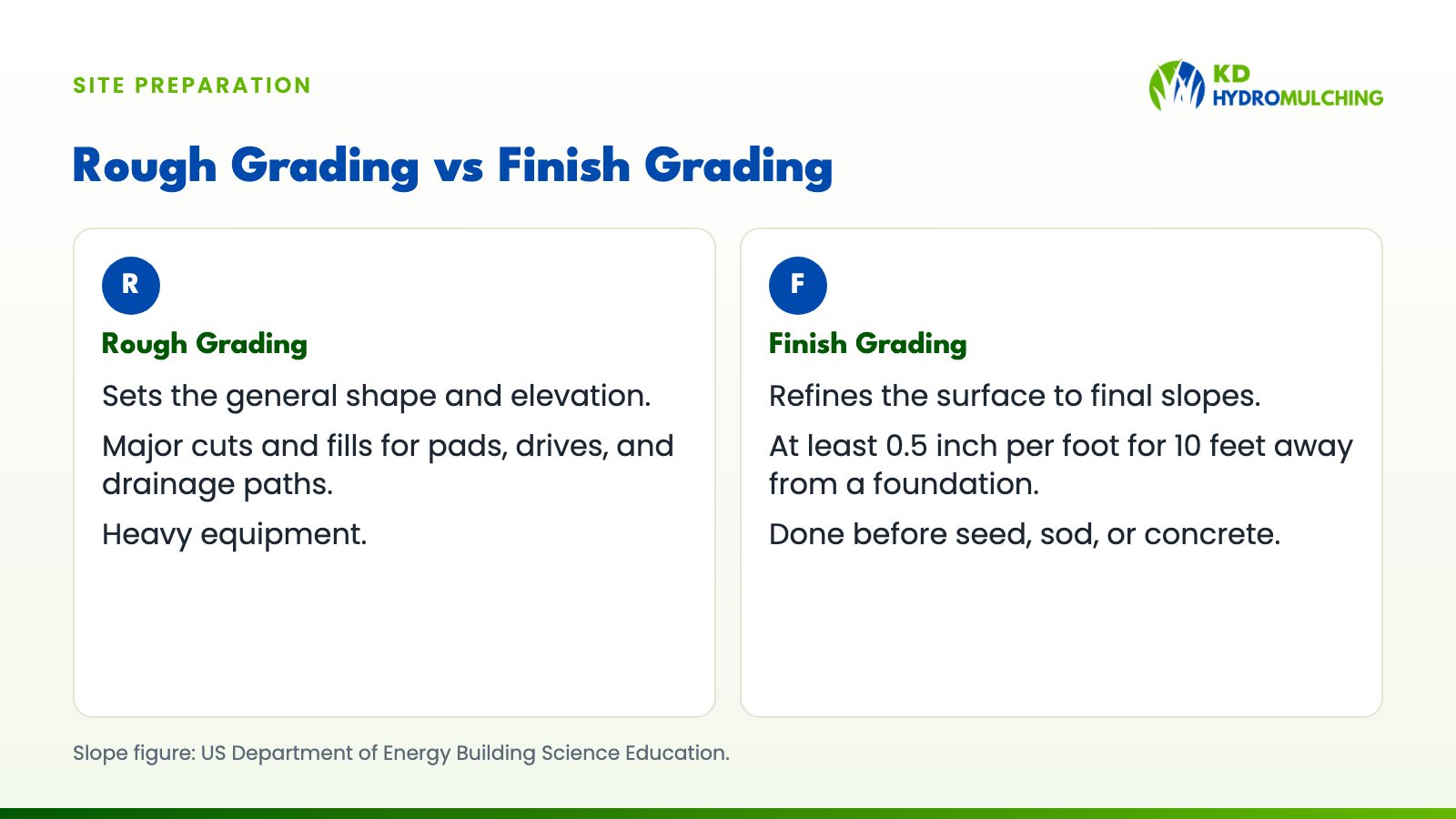
Rough grading sets the site's general shape, and finish grading refines the surface to final slopes. Rough grading handles the major cuts and fills for pads, driveways, and drainage paths. Finish grading follows once the structures and utilities are in.
Heavy equipment does the rough work, and smaller equipment does the finish work on the same site prep and maintenance job. Our grading cost guide breaks down what each stage adds to a budget. The graphic below sets the two stages side by side.
What Slope Should Graded Land Have?
Graded land should slope at least 0.5 inch per foot for 10 feet away from a foundation. The US Department of Energy gives that figure for final grade. Water then drains away from the slab, footing, and below-grade walls.
The same source caps the final layer with 2 to 4 inches of silty clay, then compacts it to prevent settling. Swales or drains carry water away when less than 10 feet of space is available. A french drain is one such option. Land clearing and leveling ends with this slope check.
How Much Does Clearing and Grading Land Cost?
Clearing and grading land costs $1.18 to $2.00 per square foot for full lot preparation. Clearing alone runs $1,500 to $6,000 per acre, based on OWNR OPS rates. One acre equals 43,560 square feet.
QuoteIQ lists rough grading at $2,000 to $6,000 per acre, and LawnStarter puts the average permit at $200. Tree density, slope, and haul-off set where a quote lands in the range. A site visit turns those ranges into a real price.
How Long Does It Take to Clear Land?
Crews clear 2 to 4 acres per day on typical sites. LawnStarter gives that rate for professional crews. Mulching takes 4 to 6 hours per acre on light brush, says OWNR OPS. Heavy growth takes 10 to 16 or more hours. Valor Environmental reports 1 to 3 days per acre on denser sites.
Slopes over 15 to 20 percent slow equipment, and wet weather adds delays. Grading follows clearing and needs dry soil for compaction. Bare soil is the next concern once the equipment moves out.
How Do You Control Erosion After Clearing and Grading Land?
Control erosion after clearing and grading land by covering bare soil within 14 days with seed and mulch, blankets, or silt fence. The EPA requires stabilizing bare areas that sit idle longer than 14 days. Cleared ground has no roots to hold soil in place. Sloped lots need a stabilization plan before the first heavy storm.
The Alabama Blue Book says slopes steeper than 3:1 need rolled or hydraulic erosion control products. Silt fence serves 1/4 acre of drainage per 100 linear feet, or 1/2 acre when reinforced. Our erosion control crew installs silt fence, blankets, straw matting, tackifiers, and soil binders. Seeding choice comes next.
Which Seeding Method Fits Cleared Land?
Hydroseeding fits cleared land because it sprays seed, mulch, and water in one pass. The Alabama Soil and Water Conservation Committee lists 4,000 gallons of water with 2,000 pounds of hydromulch per acre. Bonded fiber matrix needs 24 to 48 hours dry to bond.
Drill seeding plants seed in rows with a machine and suits flatter open ground. Our seeding cleared land work uses either method, depending on slope and access. Each method needs the right slope and soil prepared first.
New grass needs steady water in the first weeks, and the schedule depends on the season and the seed mix. Written watering steps keep the owner on track after the crew leaves. Our grass care steps cover that schedule.
What Else Should You Know About Clearing and Grading Land?
Four side questions come up on clearing and grading land projects, and each has a short answer. Tree and land clearing adds permit and disposal steps. The short answers follow.
What Does Grubbing Mean?
Grubbing means digging stumps and roots out of the soil after trees are cut. Bulldozers and excavators pull the roots. Grubbing leaves loose soil that needs compaction before grading.
Should You Save the Topsoil?
Yes, strip and stockpile the topsoil before bulldozing the subsoil. Virginia Cooperative Extension says bulldozers and loaders nearly always destroy topsoil. Stockpiled topsoil goes back on the finished slope for the lawn.
Can You Keep Some Trees While Clearing?
Yes, selective clearing keeps chosen trees while crews remove brush and invasive growth. Mark each keeper during the survey step. Grading near trunks needs a wider buffer than clearing does.
What Causes Dust on a Cleared Lot?
Dust on a cleared lot comes from dry, bare soil exposed to wind and traffic. Our dust control work wets or binds the surface. Seeding then replaces the temporary cover.
How Can We Help With Clearing and Grading Land?
We help with clearing and grading land through debris clearing, rough and finish grading, soil conditioning, and compaction fixes. Tree removal, stump grinding, and forestry mulching come from separate contractors, and we work after them. Our crews serve North Alabama.
Send us the lot size and slope through our land clearing estimate form. A site visit lets us measure the grade, mark drainage problem spots, and plan the order of work for the lot. The visit also shows access routes for equipment and any soft ground that needs extra compaction.
Owners who already see ponding or washouts can review our bare soil problems page first. That page lists common lot problems and the service for each. Problems range from erosion and compaction to poor drainage on slopes. Matching the symptom to the service shortens the planning call.
The KD Hydromulching brand home page lists every service in one place, so owners can plan the project.